
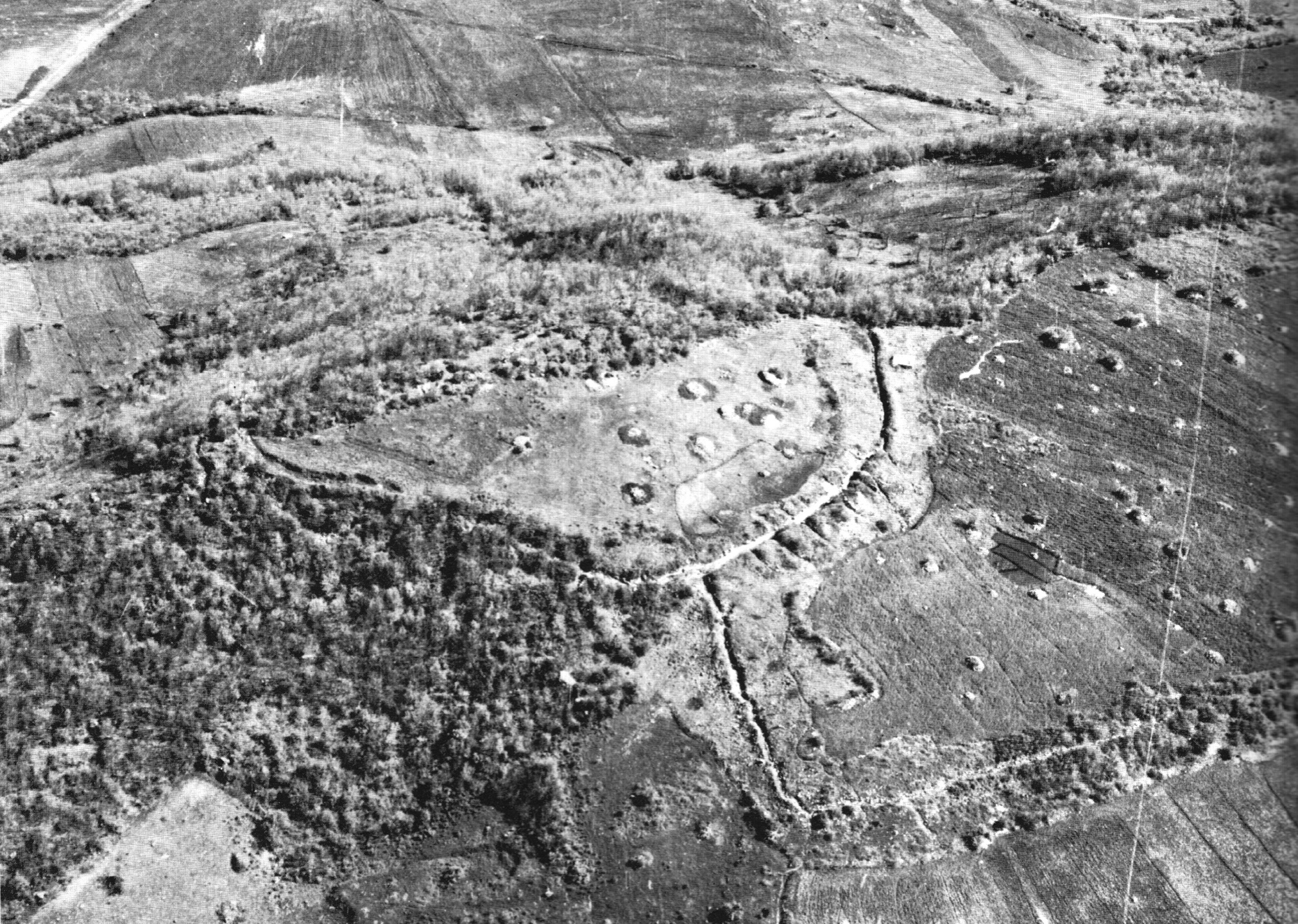
Aerial view of Monte Torretta (1964).
For three quarters of a century, archaeological research at Monte Torretta di Pietragalla has been marked by various activities carried out by different parties.
Museo Archeologico Provinciale di Potenza (1956-1965)
The prominent Italian curator and archaeologist Francesco Ranaldi (1924-1988) embodies the involvement of intellectuals in post-World War Il Italy in rebuilding communities from the ashes of the conflict. For more than thirty years he worked as director of the Archaeological Museum the Province of Potenza (Museo archeologico provinciale di Potenza). In 1954, only two years after his appointment as director of the museum, Ranaldi launched one of the major archaeological research projects of that period in Basilicata. The investigations on Monte Torretta, which turned out to be a major Lucanian hilltop fortified site, revealed much of the fortification system still visible on the site today. Unfortunately, Ranaldi’s discoveries at Monte Torretta were never fully published before his tragic suicide in the museum in 1988, leaving behind only brief preliminary reports and crates of archaeological material in the museum storerooms.
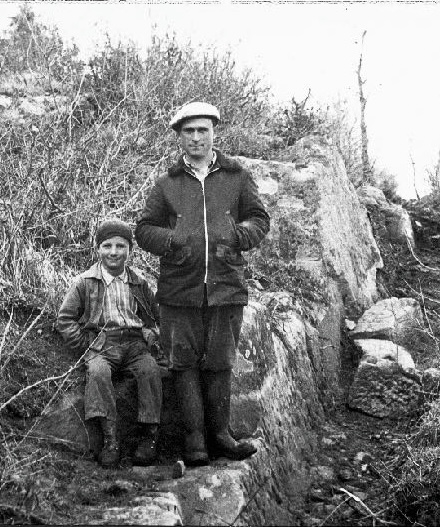
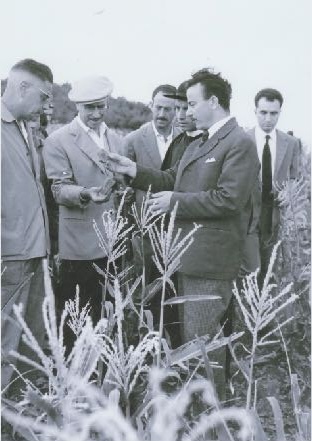
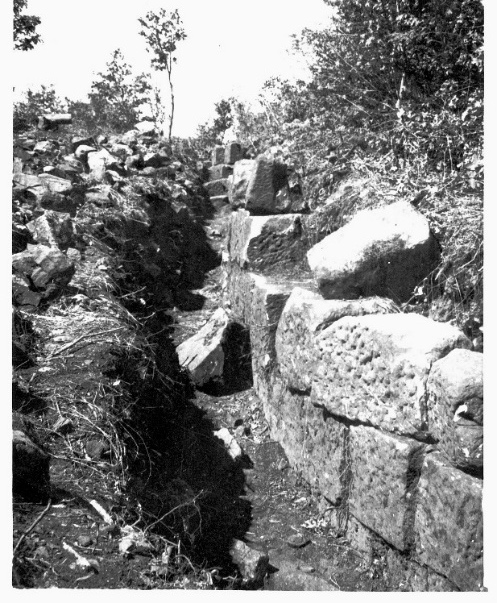
Excavations 1956-1965. Undated. Archive of the Museo archeologico provinciale di Potenza.
Soprintendenza archeologica della Basilicata (1969-1992 & 2012)
In the late 1960s Ranaldi was succeeded on Monte Torretta by Dinu Adamesteanu (1913-2004), the head of the newly created Soprintendenza archeologica della Basilicata, who dismissed Ranaldi and initiated new excavations on Monte Torretta, intercepting archaic tombs below the remains of the fortifications. Between 1989 and 1992, the dossier was further enriched thanks to the activities of the Soprintendenza: first a brief excavation led by Elisabeta Setari at the main gate of the fortification, and then a geophysical survey by Marcello Tagliente, who intercepted the remains of an artisanal facility southeast of the fortified site. None of these works was ever published and only brief mentions in archaeological reports exist. Archaeological work was briefly resumed in 2012 in nearby rescue excavations.
Thanks to a collaboration with Sabrina Mutino, who oversees the area for the Soprintendenza and is now Director of the Museo archeologico nazionale della Basilicata (not to be confused with the Museo provinciale), we have gained access to the Soprintendenza's documentation, including the limited artifacts recovered by Adamesteanu during his activities at Monte Torretta di Pietragalla.
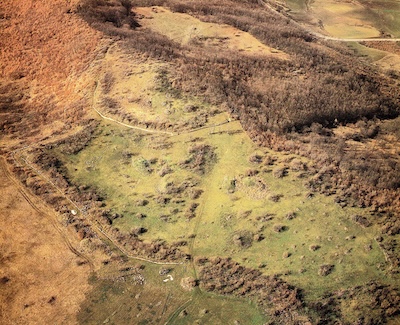
Aerial view of Monte Torretta during the 1980s. Archive of the Soprintendenza.
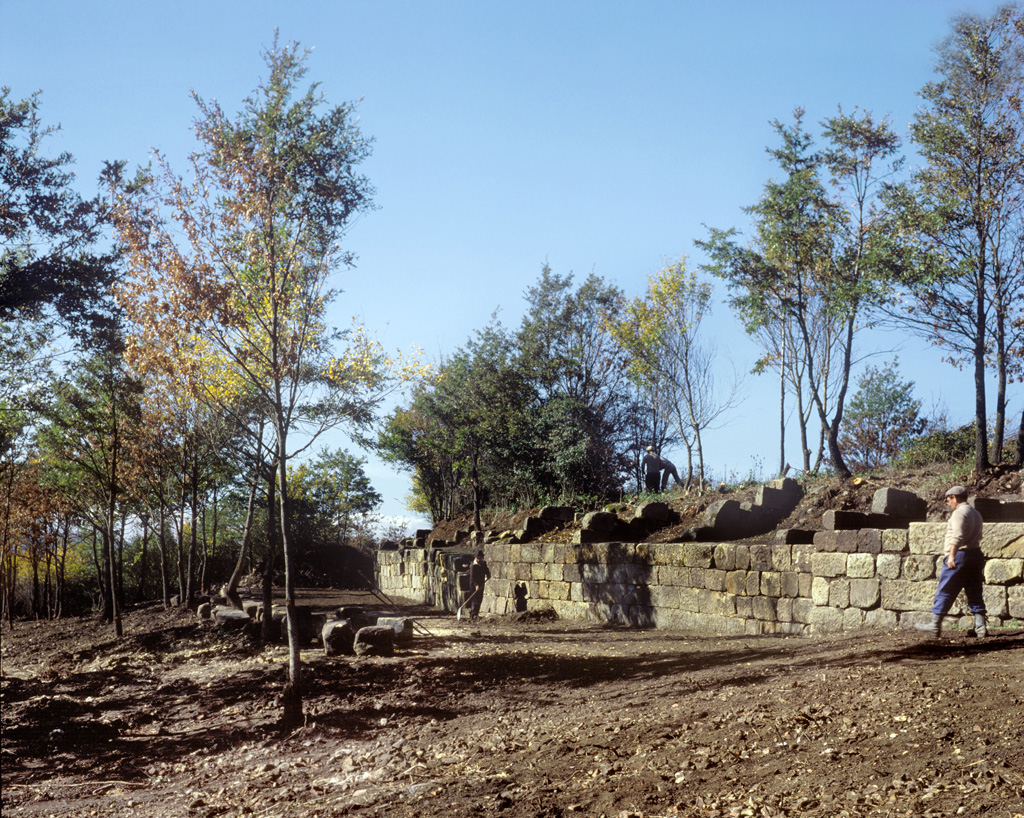
Cleaning of the acropolis wall during the 1980s. Archive of the Soprintendenza.
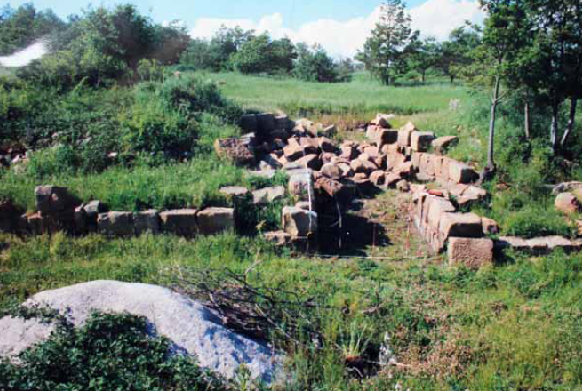
Cleaning of Porta Marie in 1989. Archive of the Soprintendenza.
Heidelberg University (2011)
In 2011, the Institute of Classical Archaeology of Heidelberg University, launched a research project on pre-Roman fortified hilltop settlements of ancient Lucania, directed by Agnes Henning, focusing on settlement patterns and defensive systems between the fourth and third centuries BC. At Monte Torretta di Pietragalla, the team concentrated on a full topographical and architectural documentation of the two fortification circuits—an outer enceinte enclosing the settlement and an inner wall around the "acropolis", both built in local sandstone with carefully worked pseudo-isodomic masonry on the upper hill. The work clarified the course of the walls, the main gate on the south side, the possible towers and internal buttress-walls on the acropolis front, and showed that the acropolis formed a distinct, higher sector accessible only from within the inhabited area, expressing both military concerns and the representational ambitions of local elites of the later fourth century BC. Particular attention was also paid to the Greek letters incised on many blocks of both circuits, whose distribution and variation (different letters and ligatures concentrated in specific sectors) suggest the involvement of multiple stoneworking groups and point to shared construction practices across several Lucanian centres.
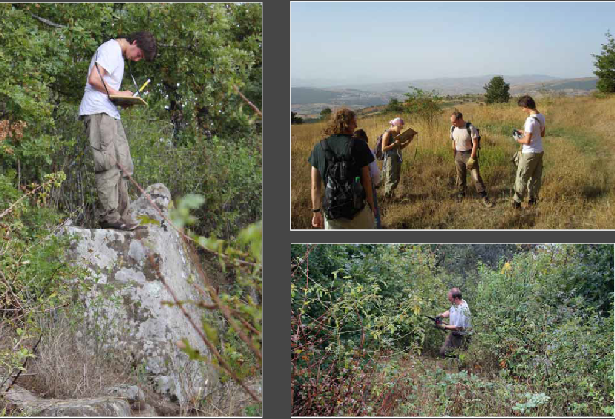
Field survey (Heidelberg university).
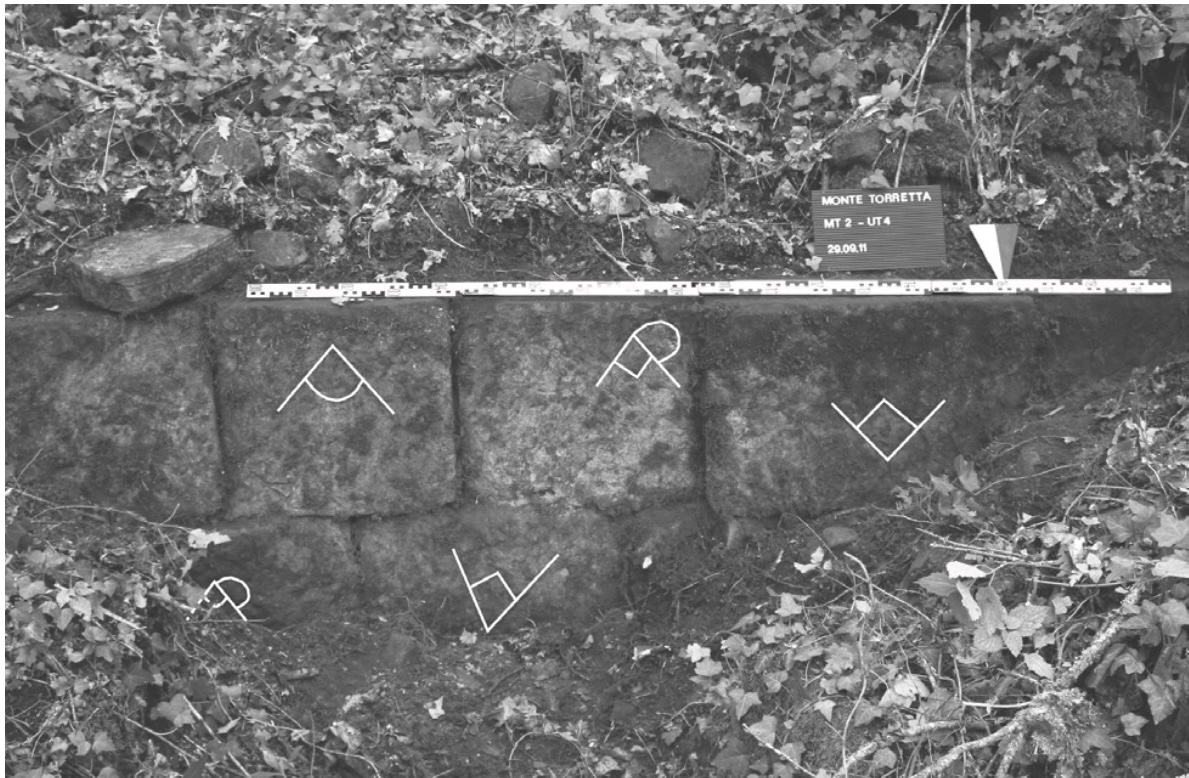
Greek letters incised on blocks (Heidelberg university).
The Pietragalla Project
In 2015, Vincenzo Capozzoli contributed to the refurbishment of the Museo archeologico provinciale di Potenza’s archaeological deposits as part of the project La Lucanie antique: archéologie et patrimoine, led by Alain Duplouy at the Sorbonne (2012-2015). The project focused on the archaeology and heritage of ancient Lucania in southern Italy. One of the most important results of the work at the museum of Potenza, albeit completely unexpected, was the rediscovery of over a dozen crates of artefacts from Monte Torretta di Pietragalla unearthed by Francesco Ranaldi, which were believed lost for years.
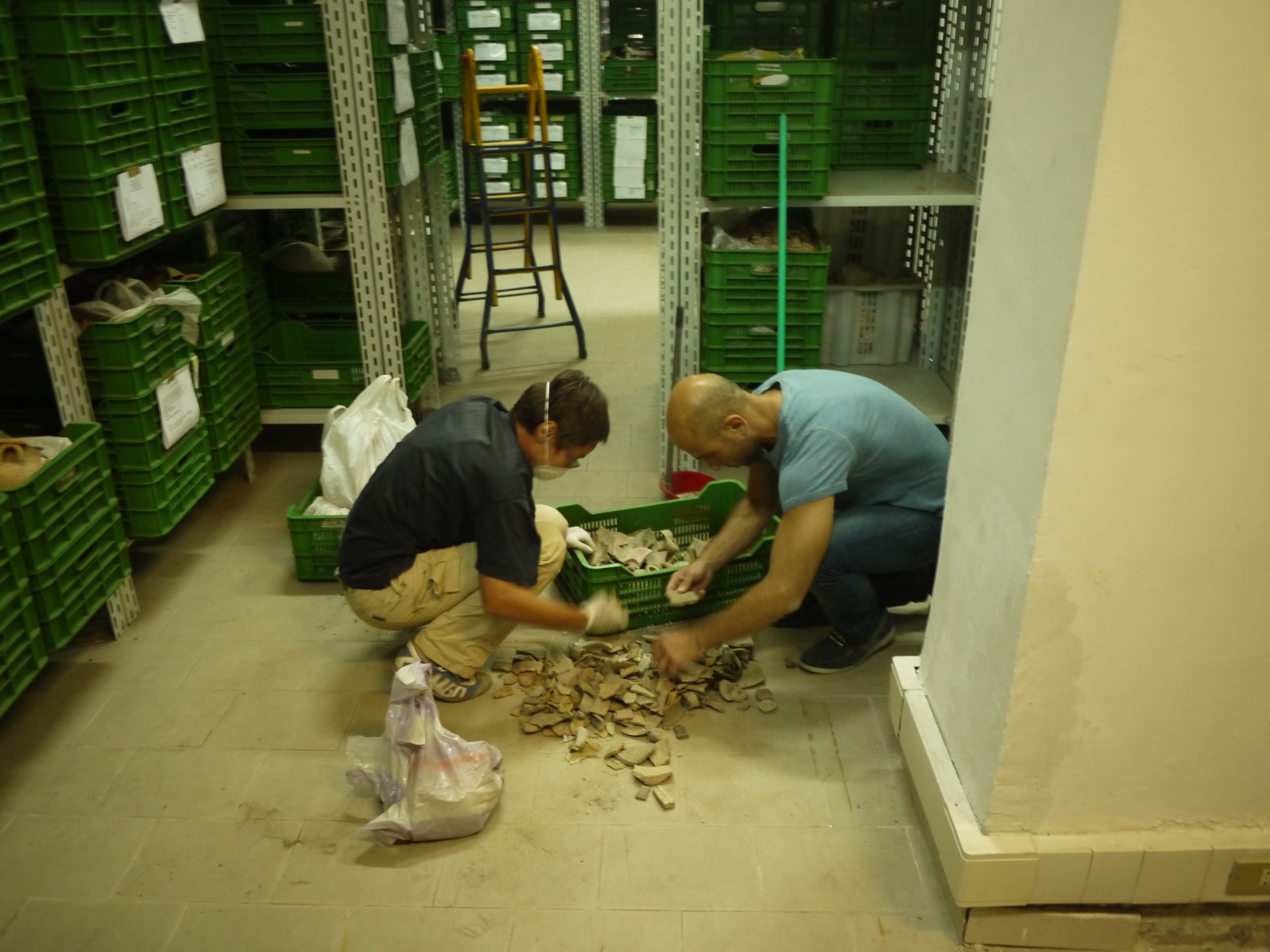
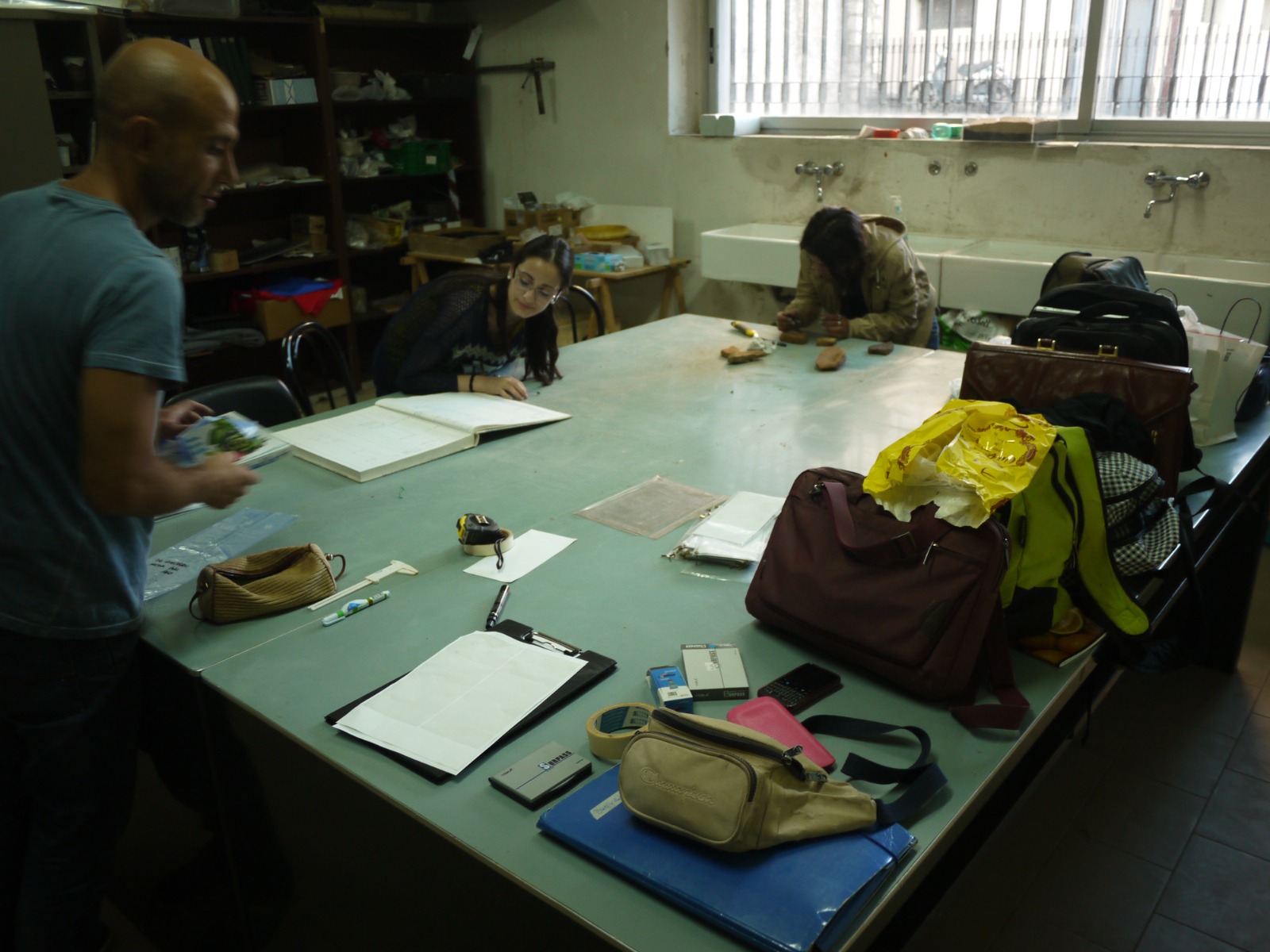
Alongside the archaeological pieces, a series of excavation documents and administrative records were rediscovered during the reorganization of the museum archives. The find sparked local interest, resulting in a 2016 workshop in the municipality of Pietragalla and a 2017 exhibition at the museum titled “Riscoprendo Monte Torretta di Pietragalla. I tesori nascosti del Museo Archeologico Provinciale di Potenza”. This renewed interest facilitated collaboration with Agnes Henning, who had surveyed Monte Torretta’s fortifications in 2011, and the Soprintendenza, recently involved in nearby rescue archaeology in 2012.
The Pietragalla Project was born. It developed as an international research program led by the Université Paris 1 Panthéon-Sorbonne and the Humboldt-Universität zu Berlin in collaboration with various Italian institutions. Between 2017 and 2023, the Pietragalla Project conducted new and limited research on the hill to recover the traces and extent of past archaeological activities, as well as to recontextualize the finds rediscovered in the museum storerooms. Six campaigns were conducted on site (with the exception of 2020), significantly improving our knowledge of the area.
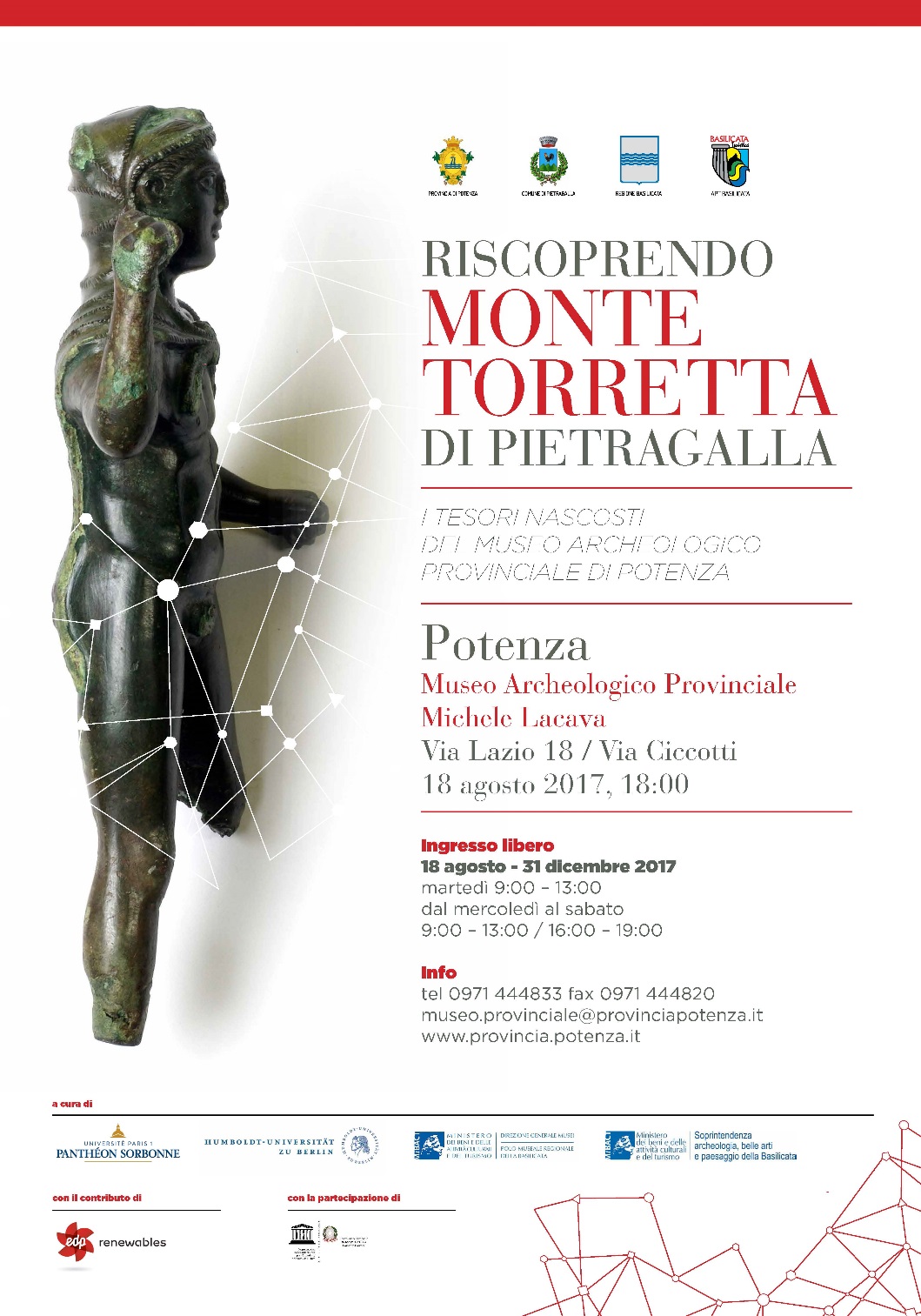
Exhibition on the Hidden Treasuries from Monte Torretta di Pietragalla.