
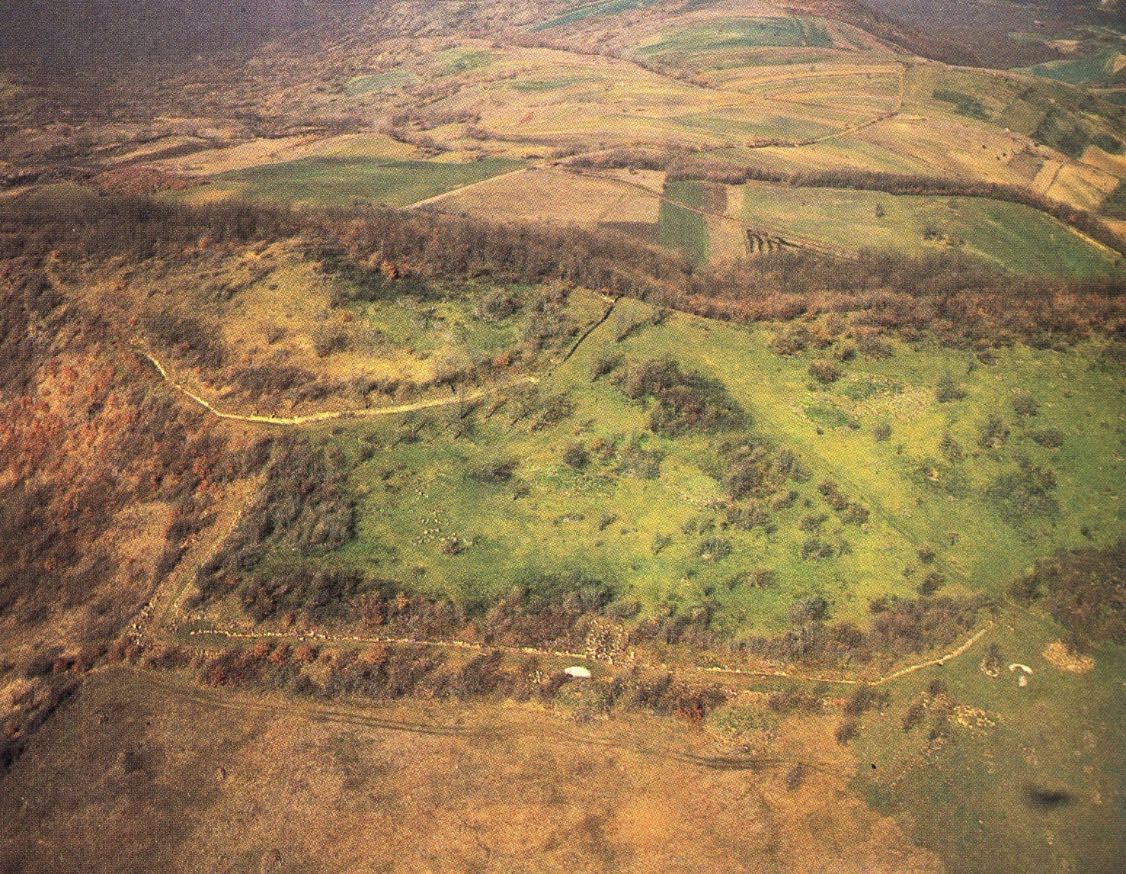
Aerial view of Monte Torretta (1980).
The Pietragalla Project
The Pietragalla Project is an international research program established by the Université Paris 1 Panthéon-Sorbonne and the Humboldt-Universität zu Berlin. Its main objective is the study of the archaeological site of Monte Torretta di Pietragalla and the preservation of its cultural heritage for the public. One of the guiding principles of the project is that of a “sustainable archaeology”, which stems from an awareness that research cannot exist for its own sake but must also act as an instrument for the present-day local community. The project also aims to train students and young researchers in field archaeology, remote sensing, and cultural heritage strategies, through practical experience in relation with the local authorities responsible for the protection and cultural development of the site and the region.

The French-German project also actively involves a formal collaboration with various Italian institutions:
- Soprintendenza Archeologia Belle Arti e Paesaggio della Basilicata
- School of Agricultural, Forest, Food and Environmental Sciences (SAFE), Università della Basilicata
- Polo museale regionale della Basilicata
- Museo archeologico provinciale di Potenza
- Istituto di Metodologie per l'Analisi Ambientale (IMAA) del CNR
- Istituto di Scienze del Patrimonio Culturale (ISPC) del CNR
- Comune di Pietragalla
- Regione Basilicata
- Agenzia di Promozione Territoriale della Basilicata (APT)
Through an interdisciplinary approach that crosses new data recovered during fieldwork with the study of early excavations’ material culture, the scientific programme of the Pietragalla Project aims to give a concrete answer to long-standing questions in the framework of Lucanian studies.
The main objective of the project is to re-examine the complex question of the lucanization of the region, i.e. the term with which historians and archaeologists designate that set of transformations that come to invest the Lucanian world starting from the middle of the fifth century BC and that some interpret as the result of the invasion by Samnite populations coming from the north, and others as the result of an internal evolution of the indigenous populations. A crucial point concerns the fortified hilltop settlements that begin to rise in the whole Lucania during the fourth century BC. Precisely for these reasons the archaeological site of Monte Torretta di Pietragalla represents a privileged observatory for dealing with these issues. It is above all a fortified hilltop site, on the northern edge of Lucania. It is an important regional crossroads that in addition is inscribed in the long lifetime: unlike many other sites Lucanian emerged almost suddenly during the fourth century BC, Monte Torretta di Pietragalla testifies a more or less continuous occupation from the end of the eighth century BC with some faint traces of the Neolithic and Bronze periods, until the later third century BC, that is after the Roman conquest and the resulting Romanization of the region.
More specifically, the Pietragalla Project will focus on:
- the debated issues of the Lucanian fortified settlements datation, through a renewed study of the Monte Torretta’s fortification system, preserved almost entirely, but never stratigraphically excavated (and therefore without chronological data) and never the object of a complete and detailed topographical survey (that can allow to understand the precise nature and the construction techniques)
- the articulation of the settlement, in particular the relationship between the two stonewall circuits, the relationship between the intra-muros and the extra-muros space, as well as the relationship between the hill of Monte Torretta and the adjacent hill of Monte Solario, the latter undoubtedly occupied between the seventh and the third century BC
- the context of discovery of the main artefacts coming from Monte Torretta di Pietragalla and preserved at the Museo archeologico provinciale di Potenza
The team members
The Pietragalla Project is co-directed by:
-
 Dr. Vincenzo Capozzoli: Vincenzo is a Lecturer in digital archaeology at the Université Paris 1 Panthéon-Sorbonne. His doctoral dissertation focussed on the topography of archaic and Classical Athens and in particular of the city fortification system. Since 2004, he has been working within several research projects of the Scuola della Specializzazione in Archeologia di Matera, on South Italian roofsystems and architectural terracottas from the Archaic to the late Hellenistic period. He held various positions in the universities of Tübingen, Berlin and Matera. In 2011 he arrived in Paris, where he has been senior post-doctoral researcher in the project "La Lucanie antique: archéologie et patrimoine", then the head of the digital laboratory of the Department of Art history and Archaeology of Paris 1, and finally lecturer since 2020.
 -
 Dr. Alain Duplouy: Alain is Professor of Greek archaeology at the Université Paris 1 Panthéon-Sorbonne, where he has been teaching since 2003. He holds a PhD in archaeology and history from Brussels and Paris universities in 2003 and an Habilitation from Paris in 2017. He was British Academy Visiting Fellow in Leeds (2009), Fulbright Scholar at UCLA in 2011, Fellow in Hellenic Studies at Harvard University in 2018, Alliance Visiting Professor at Columbia University in 2021 and Getty Villa scholar in 2024. He has led archaeological fieldwork programs in Greece (Itanos) and Italy (Laos and Pietragalla) and has published extensively on elites and citizenship in archaic Greece. Between 2012 and 2015 he led the archaeological project "La Lucanie antique: archéologie et patrimoine", which brought him to Pietragalla.
 -
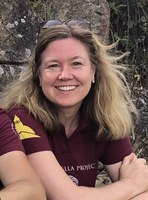 Dr. Agnes Henning: Agnes is Curator of the Winckelmann-Institut collection of antiquities of the Humboldt-Universität zu Berlin. She holds a PhD from Köln University with a dissertation on the tower tombs of Palmyra (Syria) in 2001 and was awarded the prestigious travelling scholarship (Reißestipendium) of the German Archaeological Institute. In the following years Agnes held several positions at universities and research institutions in Kiel, Berlin, Heidelberg and Rome. For more than 20 years she has been a team member of the German excavations of ancient Selinus (Sicily). Agnes is also a specialist of Lucanian fortified hilltop settlements with a focus on fortification walls, the topic of her Habilitation discussed in 2021. From 2010 to 2014 she led a landscape archaeological project on the settlement structures of ancient Lucania, during which she surveyed the sites of Monte Croccia and Monte Torretta di Pietragalla.
Pottery studies are conducted by:
-
 Dr. Lucia Lecce: Lucia is a freelance archaeologist. She gained her PhD at the Berlin Graduate School of Ancient Studies within the Program Ancient Objects and Visual studies. Her research focused on the relation between Greek sites and Italic peoples in ancient Lucania. Since her first excavation in Pompeii in 2005, she has always been fascinated by the study of the material culture in its several aspects. She participated in various archeological fieldworks and research projects of international research institutions (Deutsches Archäologisches Institut, Humboldt-Universität zu Berlin, Bonn Universität, Leiden University, Royal Netherlands Institute in Rome, University of Cape Town).
Remote sensing surveys are conducted by two laboratories of the Italian CNR under the guidance of:
-
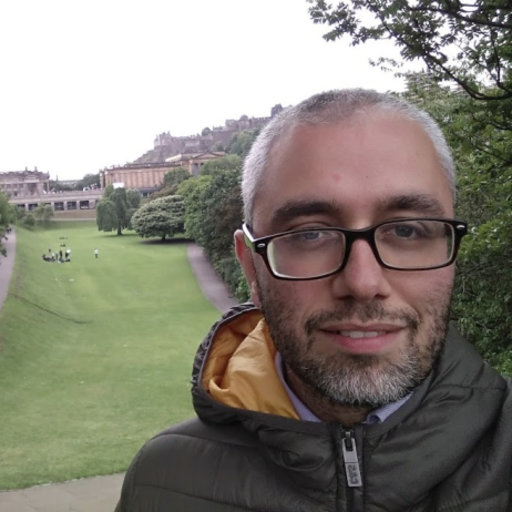 Dr. Luigi Capozzoli: Luigi (Vincenzo's brother) Luigi is a researcher at CNR-IMAA (Potenza). He received a Master of Science degree in Civil Engineering from the Università della Basilicata (Italy), from which he also holds a PhD in Environmental Engineering. His research activities focus on the use of geophysical methodologies for engineering and cultural heritage applications and he is also involved in geophysical investigations at some of the most important archaeological sites in southern Italy.
 -
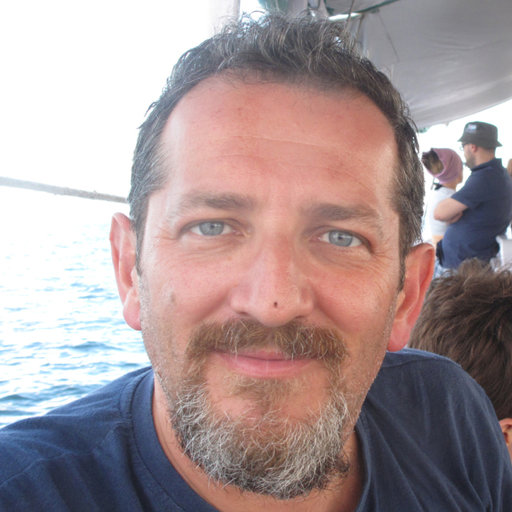 Dr. Nicola Masini: Nicola is the Deputy Director of the CNR-ISPC (Potenza). He has been visiting Professor of CAS-Beijing, Professor of Architectural restoration at the Università della Basilicata, and director of ITACA Mission in Peru. His research is focused on remote sensing in archaeology, non-invasive sensing technologies for architectural heritage conservation, and the dynamics of human frequentation and environmental changes in the Andean civilizations.
The data management system is developed by:
-
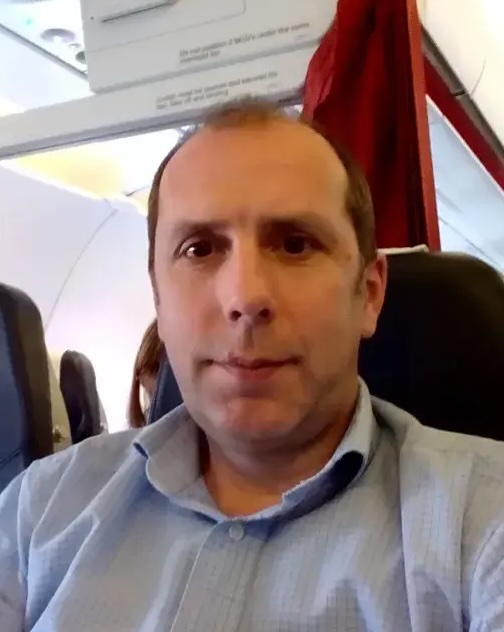 Dr. Jean-Sébastien Gros: Jean-Sébastien is digital project support manager at the Réseau des Écoles françaises à l'étranger (ResEFE). Jean-Sébastien holds a PhD in art history and archaeology and specialised in the application of digital technologies to the humanities. He has focused his career on digital research engineering and has collaborated with several French and international institutions in the field of archaeology and cultural data management.
Over the years, numerous students from various universities have contributed to the Pietragalla Project on the field and in laboratory:
- from Paris (Paris 1 Panthéon-Sorbonne): Maylla Bisson, Elisa Brandstatt, Mathilde Courcier, Aline Dauvillier, Lou Godefroy, Evdokia Kostoudi, Miriam Nova, Luciarita Nunziata, Cristiana Pace, Rachel Ramadan-Fourcadier, Mariana Silva Porto;
- from Berlin (Humboldt): David Andreas, Michelle Grau, Mia Molitor, Hannah Rathschlag, Hannah Roth, Patrick Rieger, Jessica Schneeweis, Gregor Schuster, Rolf Sporleder, Mia Theobold, Livia Ulwer, Hannah Volger;
- from Rome (Sapienza): Chiara Antonacci, Mara lacovera;
- from Istanbul (Koç University): Rana Nur Karataş.
They were supervised by several field assistants:
- Guido Antinori (Paris & Rome): Guido recently received his PhD in Near Eastern archaeology and digital humanities from La Sapienza in Rome and the Université Paris 1 Panthéon-Sorbonne, where he previously graduated in archaeology.
- Alexander Hoer (FU Berlin): Since 2023, Alexander acts as a Scientific Officer at the German Archaeological Institute in Madrid. He studied Prehistoric and Classical Archaeology at the Universities of Heidelberg and the FU Berlin, with a PhD on the fortifications of Samnium. He has also been Research Fellow at the University of Michigan and Assistant professor at the University of Zurich.
- Paloma Lorente Sebastian (Paris & Pamplona): Paloma is actually a PhD student at the Universidad de Navarra. She graduated in archaeology from the Université Paris 1 Panthéon-Sorbonne, with a later specialisation in funerary archaeology from the Université de Bordeaux. Paloma specialised in the burial practices of ancient Lucania.